
Finding My “One Thing”: A New Kind of Professional Learning
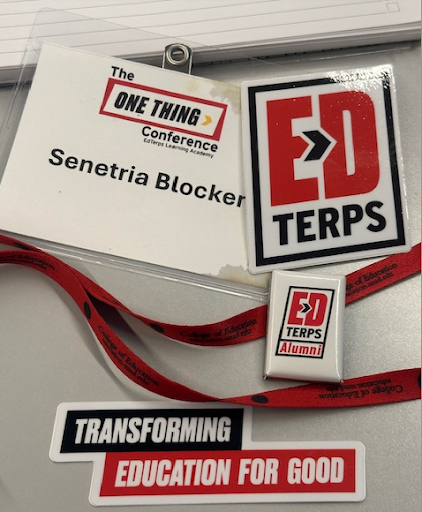
Every summer, I look forward to recharging and learning something new. For me, professional learning is energizing. I love being in rooms with other educators, sharing ideas, and discovering strategies I can bring back to my own work. This year, one of the most meaningful opportunities I had was attending the inaugural One Thing Conference, hosted by the EdTerps Learning Academy at the University of Maryland College of Education on August 6, 2025.
The atmosphere of the One Thing Conference felt alive and hopeful. The entire day was built around a simple but powerful idea: if you could walk away with just one thing—one strategy, practice, or way of thinking—that could immediately transform your work, what would it be?
As teachers and leaders, we are often inundated with new initiatives, frameworks, and tools. Professional development can sometimes feel like drinking from a firehose—so much information, so little time to process. The One Thing Conference flipped that script. Instead of skimming the surface of many topics, it invited us to go deep on a single concept that could have a lasting impact.
Every session I attended was hands-on and immediately applicable, but one that really stayed with me was Harnessing AI for Equitable Literacy Instruction: Co-Planning for Multilingual Learners. The facilitator pushed us far beyond the idea of AI as a shiny new tool; instead, we examined AI as something that can genuinely expand access and support multilingual learners when used thoughtfully. The session description captured it well—using AI to adapt mentor texts and design literacy activities that build vocabulary and comprehension. But what struck me most was the honest conversation about the responsibilities that come with integrating AI in classrooms.
Rather than treating AI as a shortcut or replacement, we explored how it might lighten teachers’ workloads, allowing us to spend more time on relationships, instruction, and targeted support. At the same time, we grappled with important questions: How do we ensure AI tools don’t widen existing inequities? How can we use AI to uplift students whose linguistic and cultural strengths are too often overlooked? This balance—innovation grounded in equity—sparked new thinking for me and reinforced the idea that technology is most powerful when it amplifies good teaching, not replaces it.
Another thing I loved about The One Thing Conference was the community it created. Professional learning can sometimes feel isolating, but here I met educators from across Maryland—teachers, administrators, coaches—who were eager to connect, share, and grow. I left the One Thing Conference feeling refreshed, focused, and hopeful. Instead of a long list of ideas I’d probably abandon, I walked away with clear, actionable steps—especially around thoughtful AI integration and dismantling barriers in my own context. Most importantly, I was reminded that professional learning can be both practical and deeply human. And ending the day with that reminder felt like the one thing I needed most.